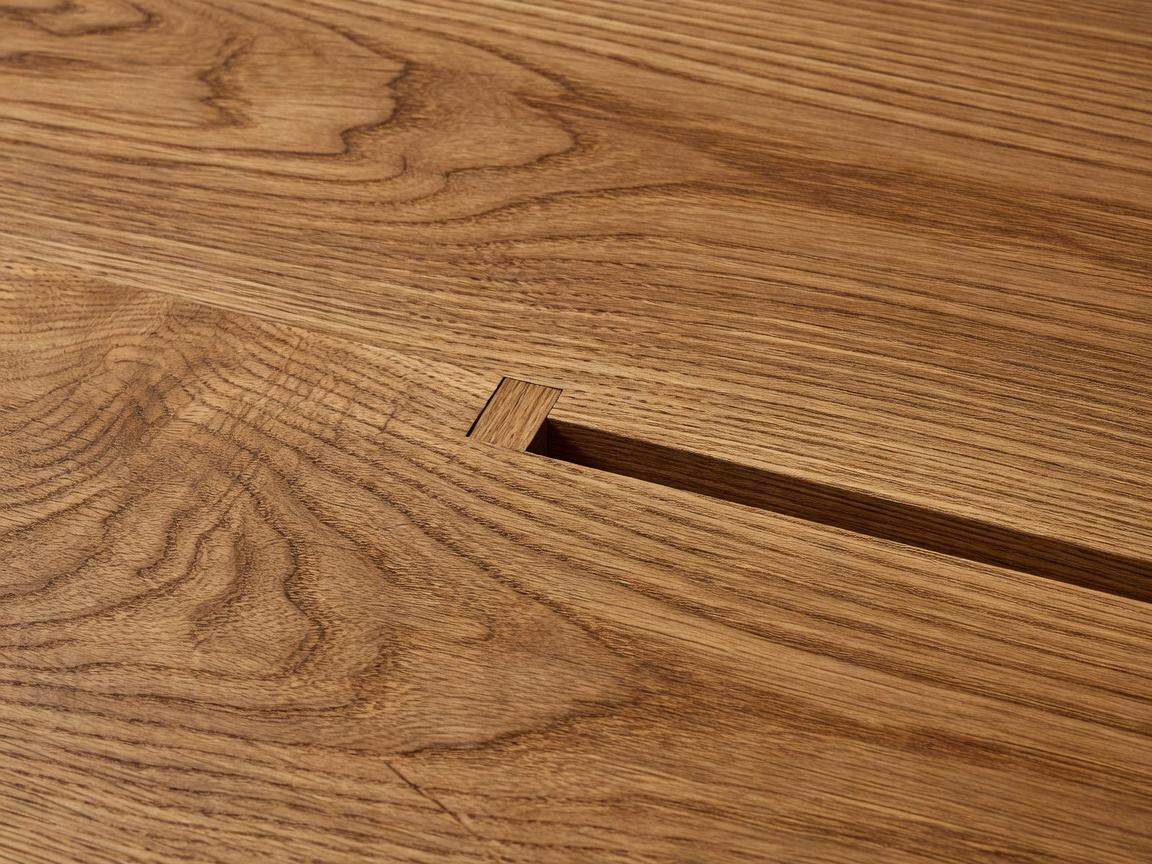
Read timber beyond the species
Oak, ash and walnut describe a broad material choice, not a guarantee of resistance to claws or standing water. Examine edge profiles, joint positions and the coating system. Solid timber moves with changes in humidity; a competent design allows that movement rather than restraining it indiscriminately. Veneer can be an appropriate, resource-conscious choice, but its edges and substrate need protection, particularly near feeding areas.
Ask for the finish manufacturer, product reference, curing instructions and the cleaning products that are compatible with it. “Natural oil” and “water-based” are not sufficient safety or maintenance descriptions. Keep animals away during application and curing according to the product instructions. If chewing is likely, discuss the suitability of the complete piece with the maker and a veterinary professional rather than relying on a reassuring marketing phrase.
Look at textile behaviour in several ways
Rub resistance is useful, but a high abrasion result does not predict every type of wear. ISO 12947-2 concerns the Martindale method for determining specimen breakdown; it does not establish that a textile resists claws, holds no hair or survives repeated domestic washing. Ask about pilling, snagging, colourfastness and the care method for the actual cover construction as well as the fabric.
Very open weaves and loops may catch claws. Dense fabrics can be easier to brush, though they still vary in feel, heat retention and stain response. Bring a sample into the room, examine it in daylight and test permitted cleaning on an offcut. OEKO-TEX STANDARD 100 addresses testing for harmful substances within its certification scope; it is not a pet-chew safety certificate or a promise of durability.
Distinguish filling from support claims
Foam density, firmness and construction are different properties. A firm-feeling cushion is not automatically longer lasting, and a thick cushion can still compress awkwardly under a particular animal. Ask how the core is specified, whether layers are bonded and how it can be replaced. A removable protective liner may improve serviceability, provided it can dry properly and does not create an uncomfortable surface.
Wool, feather and synthetic fillings have different settling and care requirements. Avoid choosing solely from a sample squeezed briefly by hand. Discuss the animal’s weight and resting habits, and request guidance about expected settling. Claims about pressure relief or medical benefit require more than a material name. Where comfort is linked to a health condition, ask the animal’s clinician before commissioning.
Use hard surfaces selectively
Metal can make a practical removable tray or bowl support, but check exposed edges, noise and finish compatibility. Powder-coated components need a clear repair route if the coating chips. A visually seamless stone insert can be heavy and difficult to lift for cleaning. Natural stone may also react to acidic residues, while joints and sealants can become the least maintainable part of an otherwise robust surface.
Specify the smallest serviceable assembly rather than permanently bonding every component together. Ask how a damaged tray or worn cover can be removed without affecting adjacent cabinetry. Material contrast can be useful: a removable metal spill tray within timber joinery separates a wet task from a vulnerable substrate. That functional distinction is more valuable than matching every visible surface.
Ask for evidence with a defined scope
FSC and PEFC certification concern forest-based sourcing and chain-of-custody systems within their respective scopes; they do not establish scratch resistance or animal safety. Request a valid, product-relevant claim rather than assuming every item from a supplier is covered. For upholstered pieces, ask which fire-safety requirements apply to the destination and intended use. EN 1021-1 and EN 1021-2 describe particular ignition tests, not an all-purpose approval of the finished furniture.
Keep the final schedule concise: material identity, finish, care, relevant evidence and replacement route. The best specification makes limitations visible. It allows a design-conscious household to choose knowingly, rather than paying for a collection of impressive terms that say little about daily use.